
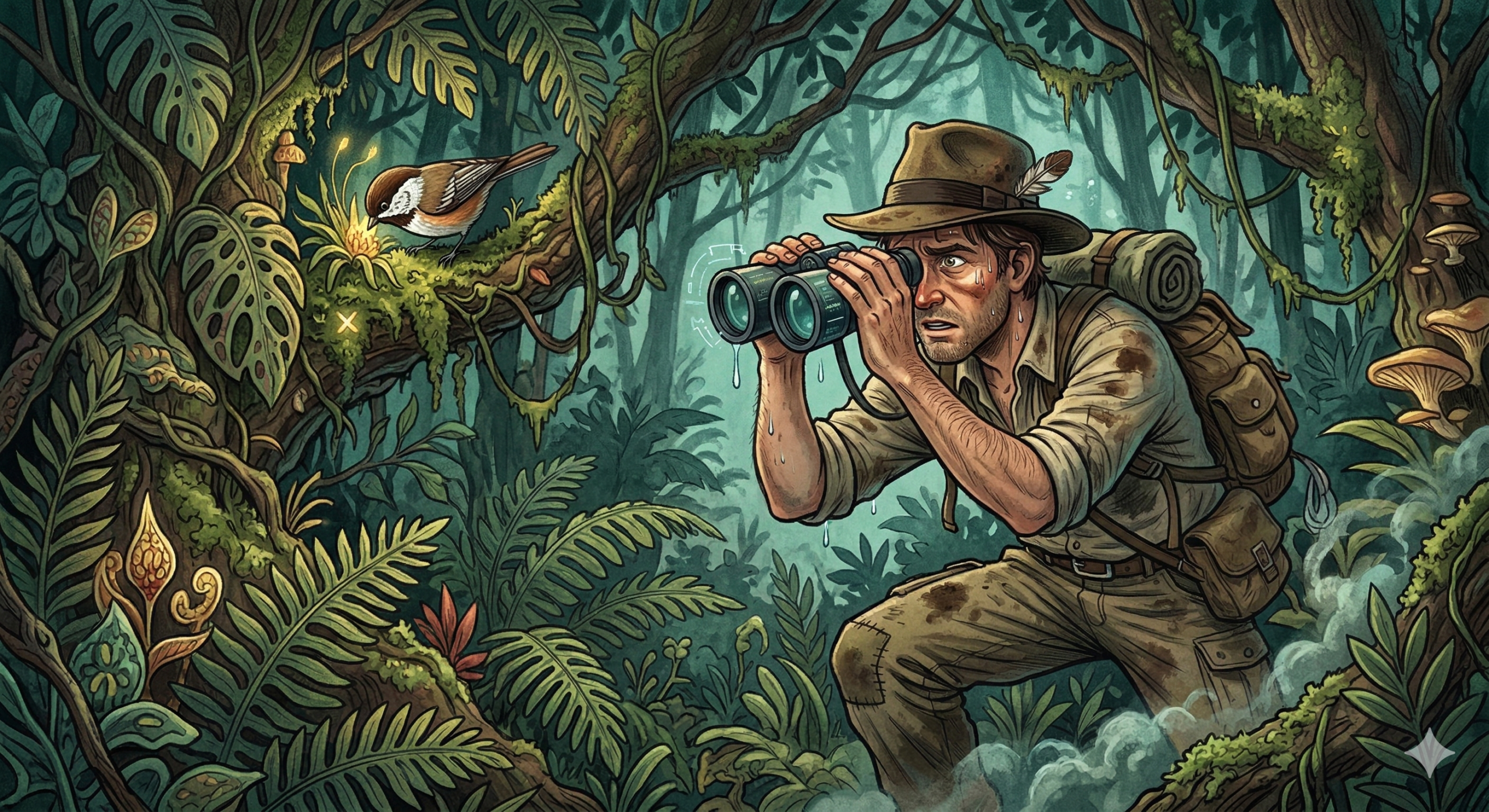
In the world of North American birding, few things are as satisfying as a dependable backyard visitor. A Black-capped Chickadee that brave-facedly taps on your window, or a bold Tufted Titmouse that rules the suet cage—these are the easy wins that keep us smiling.
But eventually, every birder craves a true adventure. You start to look beyond the common. You want the elusive. You want the localized. You want the high-stakes species that require a trek into the wild. The vast Paridae family is full of fascinating, hyper-localized birds that require significant effort, travel, and sometimes a bit of sweat to observe. To “chase” these species is a birding milestone. Here are the true ghosts of North America: four rare and elusive Tit species you absolutely should know about.
The Bridled Titmouse: The Southwestern Crown Jewel
If you want to see this Southwestern gem, you are going to need a good map and some high-clearance tires. The Bridled Titmouse (Baeolophus wollweberi) is arguably the most visually striking member of the entire family, looking like a standard gray Titmouse that was dressed up in formal tuxedo wear for a gala in the desert.
- Location: Southern Arizona, Southwestern New Mexico, and extending down into Mexico.
- Description: Instead of the typical plain gray face, this bird has complex black and white stripes (the “bridle”) and a prominent black forehead that gives it a sharp, alert expression.
- Why it’s Elusive: They require oak-juniper canyons and sycamore forests, often only in a small handful of isolated “Sky Island” mountain ranges. You won’t find this one at a casual suburban feeder.
External Resource:Explore the Bridled Titmouse at Cornell Lab
The Boreal Chickadee: The Northern Mystery
While its cousin, the Black-capped, is a ubiquitous suburban bird, the Boreal Chickadee (Poecile hudsonicus) is a ghost of the deep, cold North. This is the ultimate wilderness survivalist of the Chickadee clan, often requiring an Indiana Jones-level of determination to track down in the thick brush.
- Location: The vast Boreal forests of Canada and Alaska, stretching just into the northernmost U.S. (like the upper peninsula of Michigan, northern Maine, and Minnesota’s Boundary Waters).
- Description: It looks remarkably similar to a common Chickadee, except that its defining black cap is replaced by a striking, soft, warm-brown cap.
- Why it’s Elusive: Their habitat is frequently roadless, demanding multi-day wilderness trips to access. They are often silent during the long, dark winter, making them incredibly difficult to track without expert help.
External Resource: Audubon Guide: The Elusive Boreal Chickadee
The Gray-headed Chickadee: The Remote Enigma
You are not likely to find this bird on an organized tour. The Gray-headed Chickadee (Poecile cinctus) is legendary among “listers.” For years, it has been considered one of the hardest-to-add birds on a North American life list due to its extreme isolation.
- Location: Confined strictly to the remote alpine tundra regions of extreme northwestern Canada and interior Alaska.
- Habitat: A specialist of high-altitude willow and scrub birch thickets on mountainsides near the treeline. This is rugged, expensive, and often dangerous country to traverse.
- Why it’s Legendary: Its range is sparsely populated and requires significant (and often multi-thousand dollar) charter plane access. It is the true “ghost” of the Arctic—the ultimate prize for those on the hunt.
What’s on Your Life List?
Chasing rare species of Tit birds isn’t about ticking off boxes; it’s about experiencing the raw complexity of North American wildlife. It demands patience, specialized habitat knowledge, and often, significant sacrifice. But the moment you finally lock your eyes (or your high-tech smart optics) onto a Boreal Chickadee, you are reminded that the rarest birds often hold the deepest stories.
Have you been lucky enough to “chase” and spot any of these elusive species? Share your experience (and your location!) below!
Leave a Reply