
For decades, the “gold standard” for any serious birder in North America was a dog-eared copy of a Sibley or Peterson field guide and a pair of steady hands. You’d catch a flash of gray and white in the canopy, fumble through five hundred pages of illustrations, and hope the bird didn’t fly away before you confirmed it was a Tufted Titmouse.
Today, the game has changed. We are living in a golden age of birding where Artificial Intelligence (AI) and cutting-edge hardware have turned our smartphones into expert ornithologists. Whether you are a casual backyard observer or a seasoned “lister,” technology is making identification faster, more accurate, and more accessible than ever before.
The Power of AI in Your Pocket
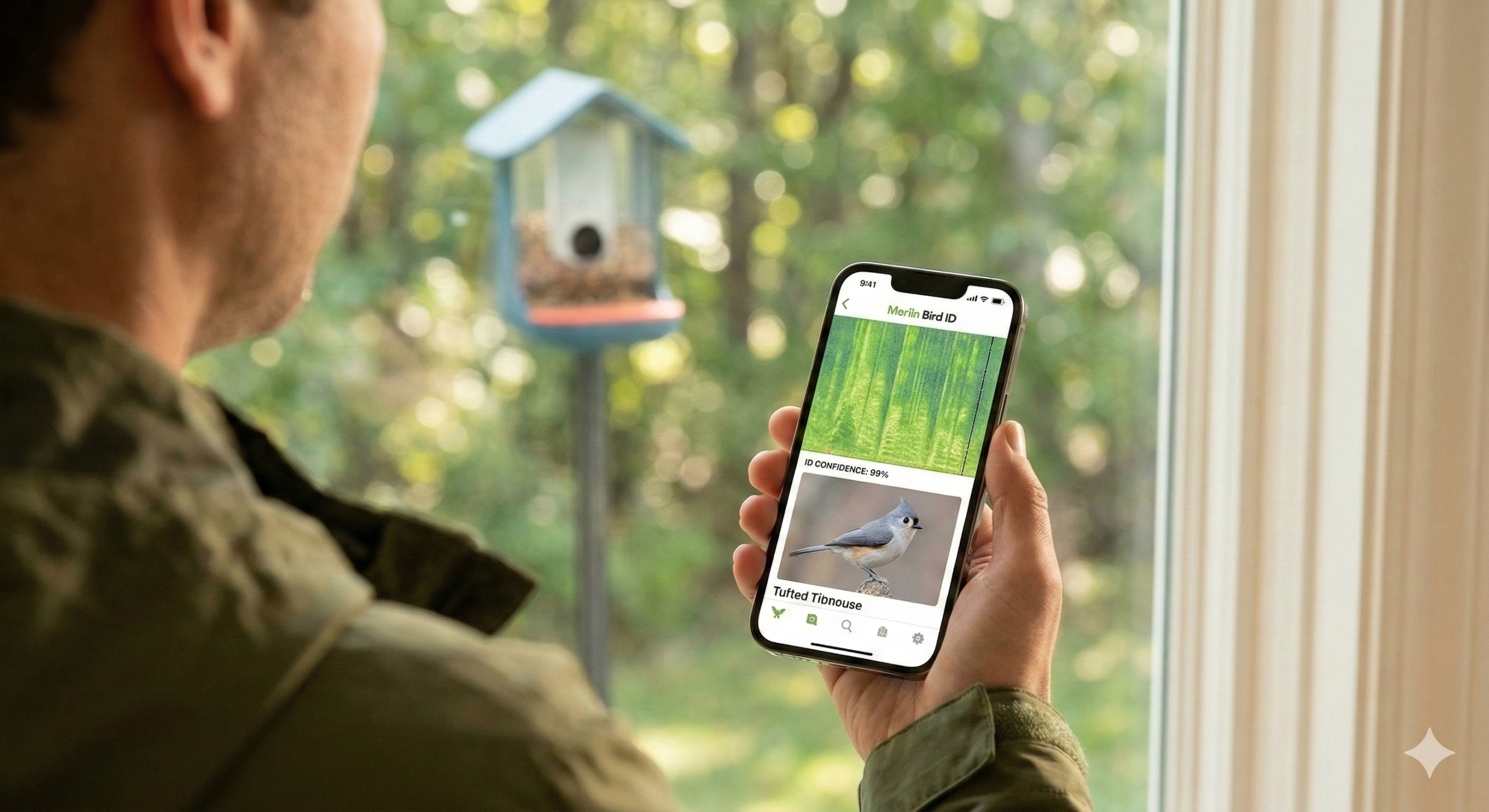
The most significant shift in modern birding is the democratization of data. Leading the charge is the Merlin Bird ID app by the Cornell Lab of Ornithology.
Using machine learning trained on millions of photos and vocalizations, Merlin can identify a bird in real-time. The “Sound ID” feature is particularly revolutionary—it acts like a “Shazam for birds,” visually scrolling through a spectrogram and highlighting the species it hears. For those of us tracking the lively Paridae family (Tits and Chickadees), this tech can instantly distinguish the buzzy chick-a-dee-dee-dee call of a Black-capped species from its near-identical cousins.
Smart Bird Feeders: The 24/7 Sentry
If you can’t spend all day staring out your window, let your bird feeder do it for you. Innovations like the Bird Buddy or Netvue Birdfy have turned traditional feeding stations into high-definition, motion-triggered cameras.
These smart feeders use AI to recognize when a visitor arrives, snap a high-resolution photo, and send a “postcard” notification directly to your phone. This technology provides an intimate look at bird behavior and plumage details—such as the subtle crest of a Bridled Titmouse—that are often missed through traditional binoculars.
Beyond the Smartphone: Smart Binoculars
While apps are great, hardware is also seeing a massive upgrade. Companies like Swarovski Optik have recently introduced the AX Visio, the world’s first AI-supported binoculars. With the push of a button, the glass overlays the name of the bird directly into your field of vision. This seamless integration of optics and software allows birders to stay “in the moment” rather than constantly looking down at a screen or a book.
Citizen Science and the Big Picture
Technology isn’t just helping us see the birds; it’s helping the birds survive. Every time you use an app to identify a species, you have the option to contribute to eBird, the world’s largest biodiversity-related citizen science project.
By logging your sightings of North American Tits and other local species, you provide researchers with vital data on migration patterns, population shifts, and the impacts of climate change. Your backyard hobby is now a global conservation effort.
Technology hasn’t replaced the soul of birding; it has simply removed the barrier to entry. By utilizing AI-powered apps, smart feeders, and high-tech optics, we can spend less time guessing and more time appreciating the incredible diversity of our feathered neighbors.
What’s the coolest bird you’ve caught on camera lately? Drop a comment below or check out our comprehensive guide to North American Tits to start your ID journey!
Leave a Reply