So, you’ve noticed a flash of feathers in the backyard and realized that “small gray bird” is actually a Tufted Titmouse. Congratulations—you’ve officially caught the birding bug! But where do you go from here? The world of ornithology can feel overwhelming when you’re staring at a field guide with 900 species.
The good news is that we live in the golden age of birding education. Whether you want to master the art of “pishing,” understand complex migration patterns, or just figure out which Chickadee is visiting your feeder, these resources are the ultimate toolkit for your new obsession. Grab your binoculars; class is in session.
Digital Mentors: The Best Birding Apps
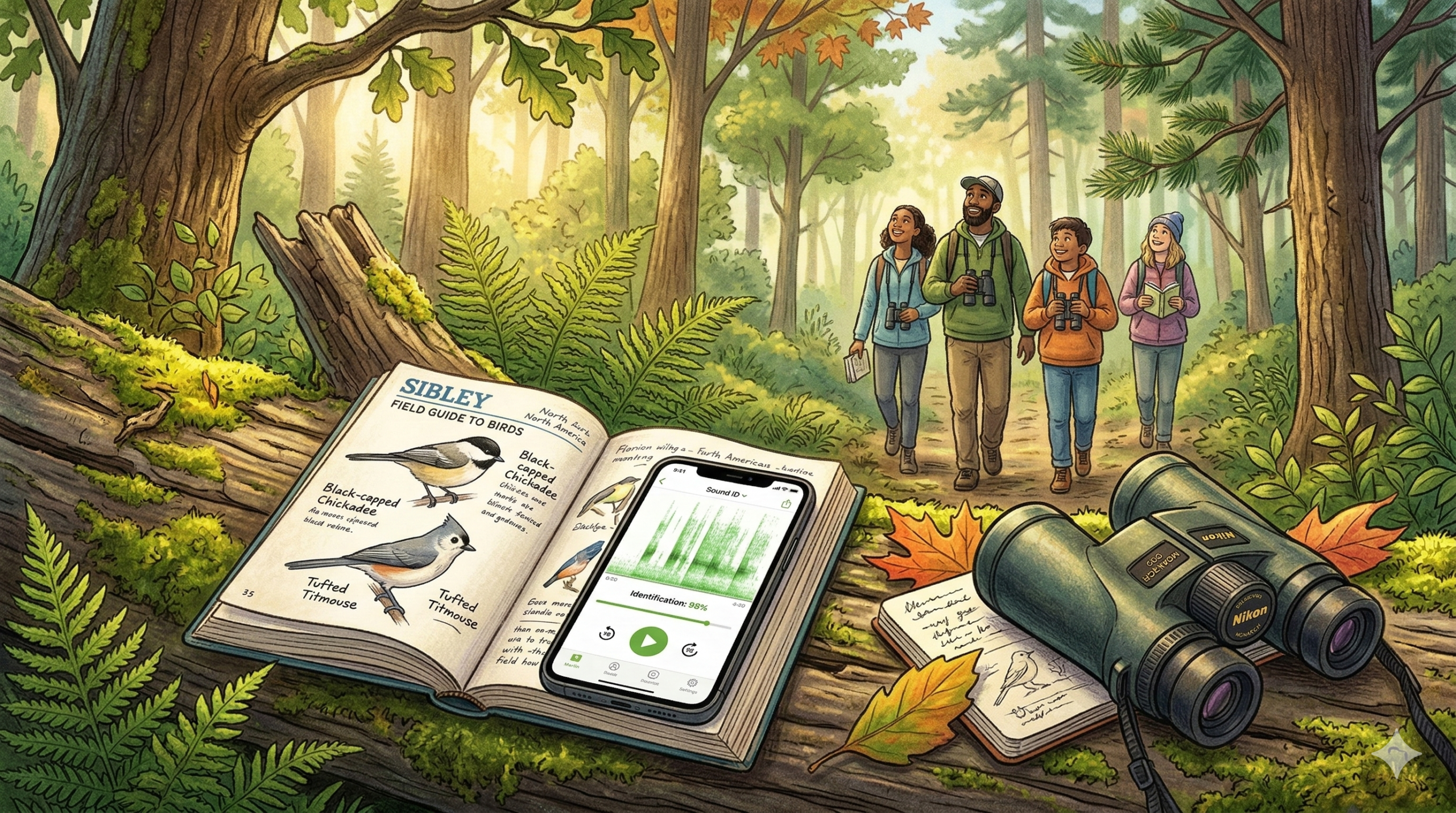
In the modern field, your smartphone is your most valuable piece of gear. For beginners, these two apps are non-negotiable for identifying North American species on the fly.
- Merlin Bird ID: Created by the Cornell Lab of Ornithology, this is the gold standard. It uses AI to identify birds via photos or by “listening” to their songs in real-time.
- eBird: Once you can identify them, log them! eBird allows you to contribute to citizen science while keeping a digital “life list” of every species you encounter.
External Resource: Download Merlin Bird ID at Cornell Lab
The Paper Trail: Essential Field Guides
Even with high-tech apps, there is no substitute for a physical field guide. Books allow you to compare similar species side-by-side—a crucial skill for distinguishing between a Black-capped and a Carolina Chickadee.
- The Sibley Guide to Birds: Renowned for its detailed illustrations that show birds in various flight positions and seasonal plumages.
- National Geographic Field Guide to the Birds of North America: A favorite for beginners due to its clear maps and concise identification “quick tips.”
External Resource: Audubon Guide: How to Choose Your Field Guide
Free Online Courses and Communities
You don’t need a degree in biology to understand avian behavior. There are incredible free and low-cost communities designed specifically to help beginners bridge the gap from “curious” to “competent.”
- Bird Academy (Cornell): They offer “Joy of Birding” courses that cover everything from binocular basics to advanced nesting behavior.
- Local Audubon Chapters: Most cities have a local chapter that hosts free “Beginner Bird Walks.” There is no better way to learn than by standing next to an expert in the field.
What’s on Your Life List?
The journey from a casual observer to a dedicated birder is a marathon, not a sprint. Use these resources to build a solid foundation, but remember that the best teacher is time spent outdoors. Every time you identify a new Tit or Chickadee, you’re not just checking a box—you’re learning the language of the natural world.
Which resource helped you identify your first bird? Are you a “book birder” or an “app birder”? Share your favorite learning tips below!
Leave a Reply